
What Are the Downsides of Composite Decking?
We build TimberTech decks for a living, so you'd expect us to tell you composite is perfect. It isn't. No decking is.
Here's our honest list of the downsides, and what we do about each one. If these don't scare you off, composite is probably a great fit for you. If one of them does, it's better to know now than after the deck is built.
For the full picture on TimberTech materials, start with our complete TimberTech decking guide.
This Month Only
Up to $1,500 Savings
5% Off Your Project
Sign with deposit by Monday, November 30th
1. It costs more upfront than wood
This is the big one. A TimberTech deck costs more on day one than a basic pressure treated wood deck.
The gap is smaller than most people think, though. The boards are only part of the price. The framing, footings, stairs, railing and labor cost about the same either way. And with composite you skip the sanding, staining and sealing every couple of years, plus the board replacements that wood decks need as they age.
What we do about it: we show you real numbers so you can decide with your eyes open. Our last 20 TimberTech decks averaged about $35,000. See the full breakdown in our guide on how much a TimberTech deck costs. We also offer flexible payment options.
2. It gets hot in direct sun
All decking gets hot in full summer sun. Composite and PVC are no exception, and darker colors get hotter than lighter ones. A south or west facing deck at 3 in the afternoon in July can be uncomfortable on bare feet.
What we do about it: we help you pick the color with your deck's sun exposure in mind, and we bring samples so you can see and feel them at your house. TimberTech Advanced PVC also cools down quickly once the sun drops, which is a real plus if you mostly use your deck in the evening.
3. It can scratch
Composite is tough, but it isn't scratch proof. Dragging a grill, sliding heavy furniture, or a big dog running laps can leave marks, especially on darker, smoother boards.
What we do about it: we steer you toward collections and colors that hide wear well. Multi tone boards with more grain show far less than solid dark colors. Light scuffs tend to fade as the board weathers. Pads under furniture and a mat under the grill go a long way.
4. You can't refinish it or change the color later
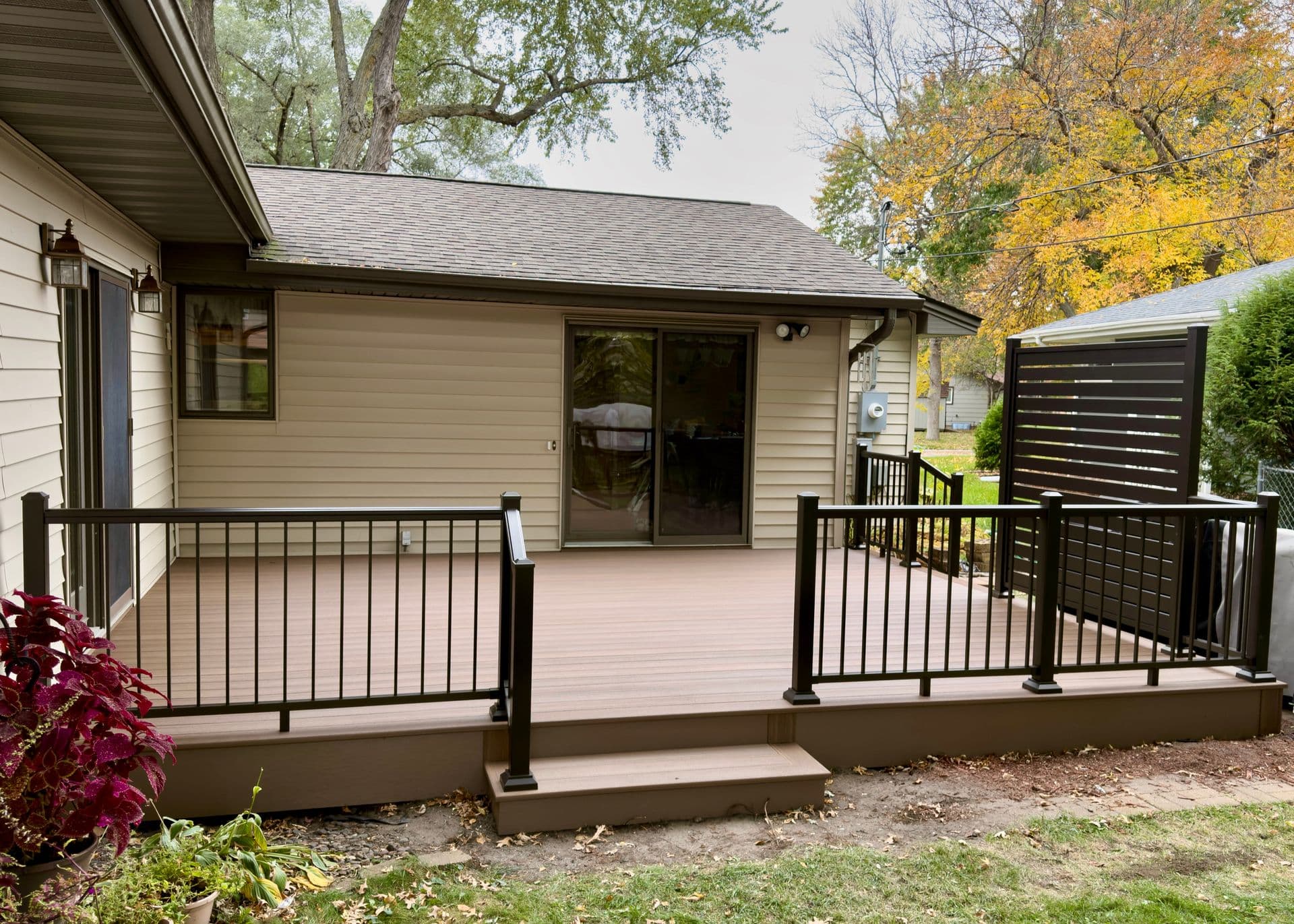
With wood, you can always sand and stain it a new color. With composite, the color is built into the board's protective cap. You can't paint it, stain it or sand it. Whatever color you pick, you're living with it for decades.
What we do about it: we take color selection seriously. We look at samples next to your siding, trim and roof, in sun and in shade, before anything is ordered. Our guide on whether you can paint, stain or pressure wash TimberTech explains why.
5. It moves with temperature
Composite and PVC boards expand and contract as temperatures swing, and Minnesota swings a lot. PVC moves a bit more than composite. If boards are installed without the right gaps and fasteners, you can end up with gaps that open and close, or butt joints that don't line up.
What we do about it: this is an install problem, not a product problem. We follow TimberTech's gapping and fastening requirements, and we use picture framing and layout that keep board ends tight and clean.
6. It isn't maintenance free
"Low maintenance" gets oversold. Composite doesn't need staining, but it still needs cleaning. Pollen, leaves and dirt left sitting on the boards, especially on shaded decks, can leave spots and mildew on the surface.
What we do about it: we tell you upfront what upkeep looks like. That's a good cleaning once or twice a year with the right cleaner and brush, and keeping leaves swept off. It's a few hours a year instead of a weekend of sanding and staining every spring.
7. The frame underneath is still wood
This one surprises people. The boards are composite or PVC, but most deck frames are still pressure treated lumber. A 30 or 50 year board on top of a poorly built wood frame doesn't make a 30 or 50 year deck.
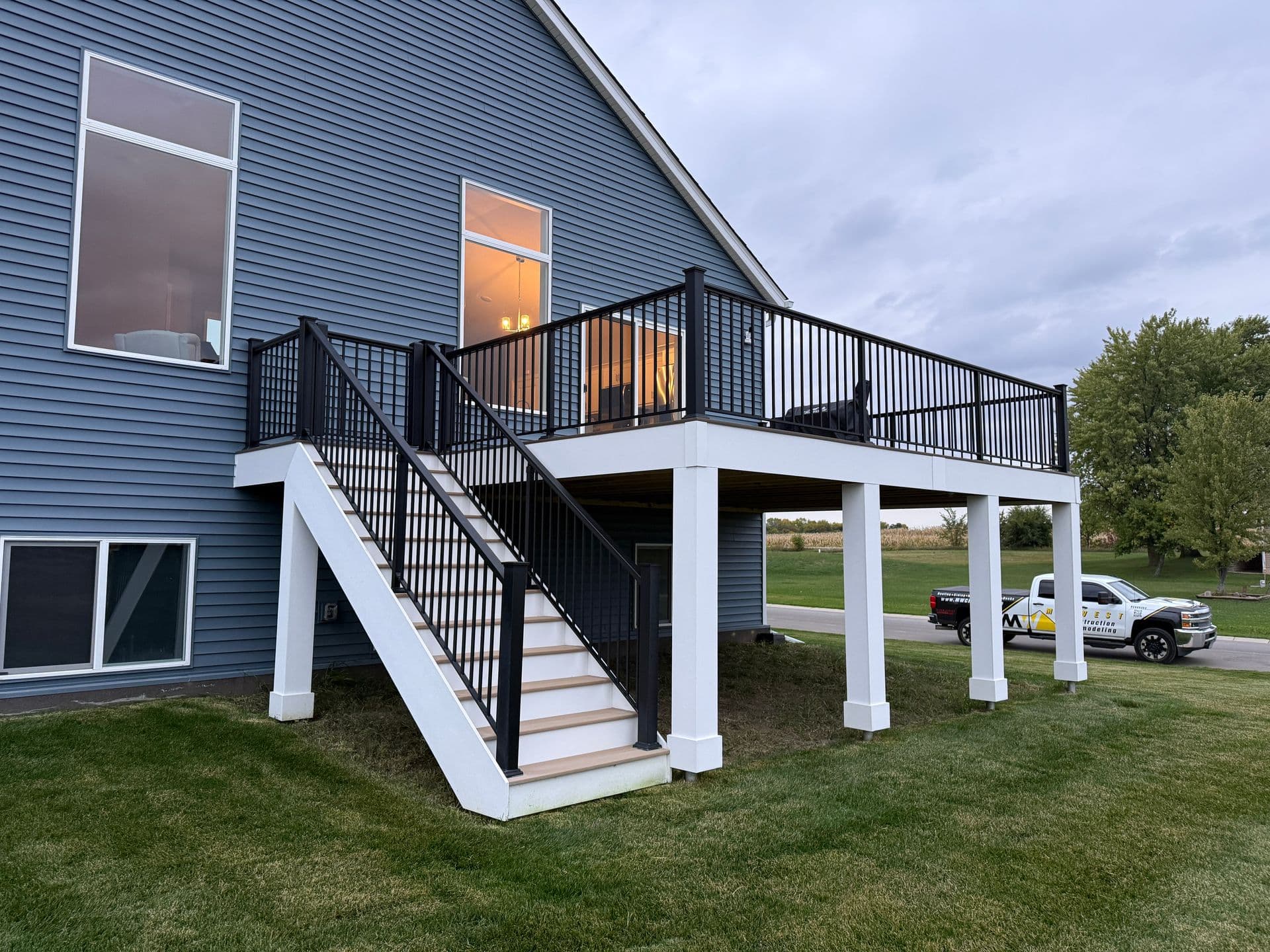
What we do about it: we build the structure to match the boards. We use helical piers below the frost line, 2x10 joists, proper ledger flashing, and railing posts blocked and fastened into the frame. We only reuse an existing frame when it's in excellent structural condition and can be grandfathered in under current code. If there's any doubt, we replace it. More on that in our guide on how long TimberTech decking lasts.
8. Not all composite is created equal
Cheap, older and uncapped composite boards gave the whole category a bad name. They faded, stained and grew mold. Modern capped boards from a manufacturer like TimberTech are a different product, but the low end of the market still exists.
What we do about it: we only install TimberTech, and as a TimberTech Gold Pro we install it to their standards. Our decks qualify for 10 years of replacement labor coverage from TimberTech, or 12 years with TimberTech railing. That's on top of our own 10 year labor warranty. Comparing brands? Read our TimberTech vs Trex comparison.
So is composite still worth it?
For most homeowners we work with, yes. The downsides are real, but almost all of them come down to two things: choosing the right board and color, and building it right. Get those two things right and you get a deck that looks good for decades without the yearly staining routine.
If heat is your biggest worry, or you love being able to refinish a deck every few years, wood might honestly suit you better. We'd rather tell you that now.
Want an honest opinion on your deck?
Book a free deck consultation and we'll walk your yard, look at your sun and shade, and bring TimberTech samples to your home in Plymouth, Maple Grove, Minnetonka or anywhere in the west metro. Want a ballpark first? Try our online deck estimate tool. You can also see more of our deck replacement work.
FAQ
What is the biggest downside of composite decking?
The upfront cost. It costs more than a basic wood deck on day one, though you save on staining, sealing and board replacement over the years.
Does composite decking get too hot?
All decking gets hot in full sun, and darker colors run hotter. Lighter colors help, and TimberTech Advanced PVC cools down quickly once the sun drops.
Does composite decking scratch easily?
It can scratch, especially darker solid colors. Multi tone boards hide wear well, and pads under furniture prevent most marks.
Can you change the color of a composite deck later?
No. You can't paint, stain or sand modern capped composite, so the color you choose is the color you keep.
Does composite decking get moldy?
Modern capped boards resist mold, but dirt and pollen left on the surface can spot, especially in shade. Regular cleaning prevents it.
Is composite decking worth it despite the downsides?
For most homeowners, yes, as long as the right board and color are chosen and the deck is built right underneath.
Related reading
TimberTech Composite Decking: Everything Minnesota Homeowners Should Know
How Much Does a TimberTech Deck Cost?
How Long Does TimberTech Decking Last?
TimberTech vs Trex: Which Decking Is Better?
Can You Paint, Stain or Pressure Wash TimberTech Decking?
TimberTech Composite vs Advanced PVC: Which Is Right for Your Deck?
Contact Us
Mon-Fri: 7am-8pm
Sat: 9am-5pm
Sun: Closed