
How Long Does TimberTech Decking Last?
When you're spending real money on a deck, you want to know how many summers you'll get out of it. Here's the short answer, and then the part most people don't hear until it's too late.
For the full picture on TimberTech materials, start with our complete TimberTech decking guide.
This Month Only
Up to $1,500 Savings
5% Off Your Project
Sign with deposit by Monday, November 30th
The short answer
Pressure treated wood: about 10 to 15 years, and that's with regular staining and sealing.
TimberTech composite: TimberTech estimates 25 to 30 years or more. Its composite boards carry a 25 or 30 year product and fade and stain warranty, depending on the collection.
TimberTech Advanced PVC: TimberTech estimates 50 years or more. It carries a limited lifetime product warranty and a 50 year fade and stain warranty.
PVC lasts longer because there's no wood fiber in it at all. Nothing in the board can soak up water, rot or feed mold.
The part nobody tells you: the boards can outlast the deck
A 30 year board doesn't make a 30 year deck. The deck is only as good as what's holding it up.
Most decks we tear out in Plymouth, Maple Grove and Minnetonka aren't failing because of the boards. They're failing underneath. We see rotted joists, a ledger that let water into the house, footings that heaved with the frost, and wobbly railing posts.
That's why we build the structure to match the boards:
Helical piers instead of poured concrete footings. They're screwed down below the frost line, so the deck doesn't heave and settle through Minnesota freeze and thaw.
2x10 joists. A stiffer frame stays flat and solid for the life of the boards.
Proper ledger flashing where the deck meets your house, so water stays out of your rim joist.
Railing posts blocked and fastened into the frame, not just screwed to the edge.
If your boards are going to last 30 or 50 years, the frame has to be built for that too.
Can you keep your old frame?
Sometimes. When we look at an existing frame, we ask two questions. Is the framing in excellent structural condition, with no rot, damage or sagging? And can it be grandfathered in under current code? We only reuse a frame when the answer to both is a clear yes. If there's any doubt, we replace it.
If both answers are yes, putting new TimberTech boards on it can make sense. If not, new boards on an old frame is money poorly spent. You'd be putting a 30 year surface on a structure that might have 5 years left.
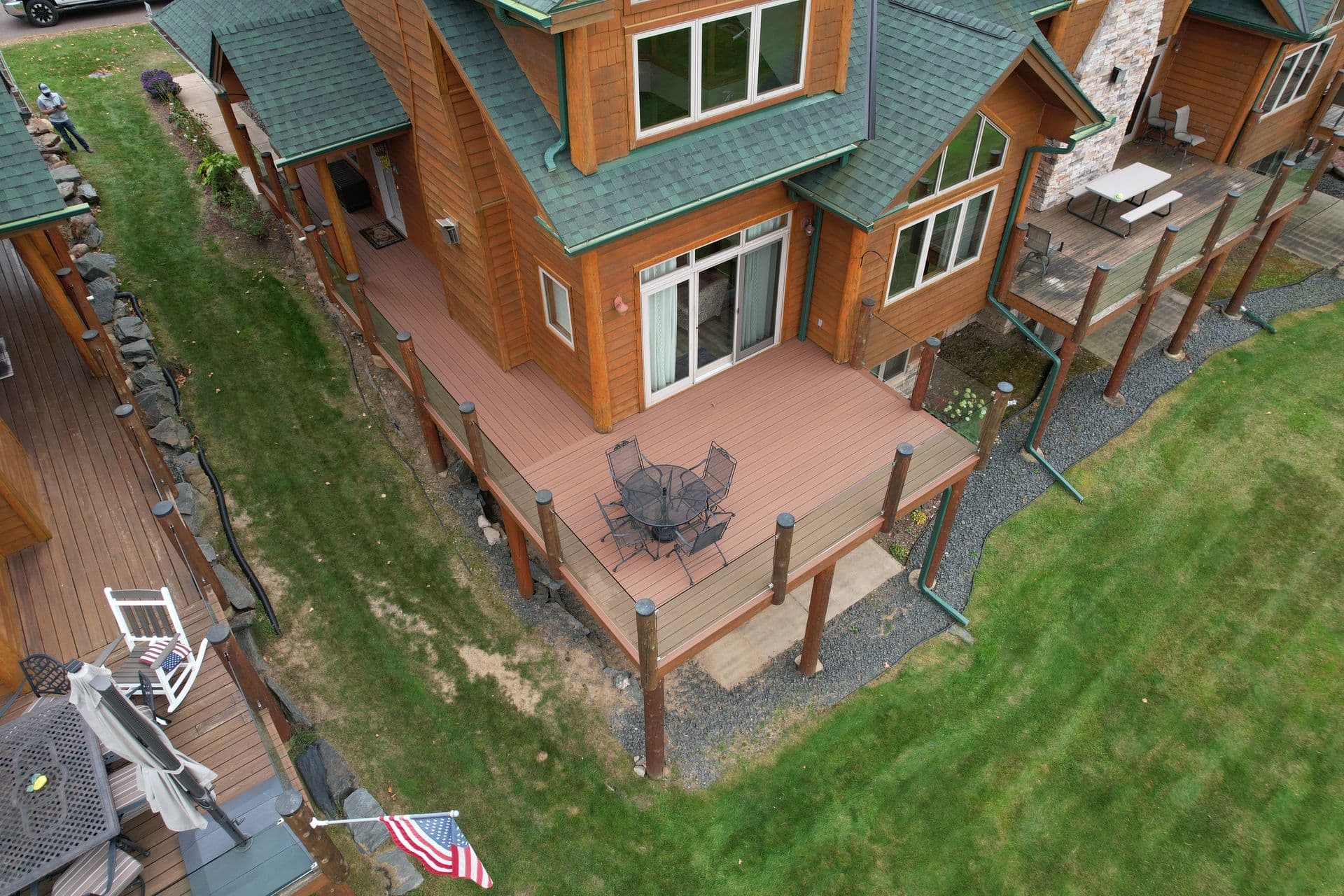
What Minnesota weather does to a deck
Snow and ice
TimberTech boards handle snow fine. What hurts them is how the snow comes off. Use a plastic shovel, push in the direction of the boards, and skip the metal edge and the ice chopper. For ice, calcium chloride is fine on TimberTech. Skip rock salt.
Freeze and thaw
This is where wood decks and weak footings struggle. Water gets into wood, freezes, and opens it up a little more every winter. Composite and PVC boards are capped, so water can't soak in the way it does with wood. And footings set below the frost line, like helical piers, don't heave.
Summer sun and heat
All decking gets hot in direct sun, and darker colors get hotter. PVC heats up fast, but it also cools down quickly once the sun drops. If you mostly use your deck in the evening, that's a real plus. If your deck faces south or west, consider a lighter color.
Shade, leaves and damp corners
Shaded decks under big trees stay damp longer and collect leaves and pollen. That's where Advanced PVC shines, because there's no wood fiber in it to feed mold or mildew. Keeping the gaps between boards clear of leaves helps any deck dry out and last longer.
Signs your current deck is near the end
Soft or spongy spots when you walk on it.
Railing that moves when you lean on it.
Stairs that wobble or treads that flex.
The deck pulling away from the house at the ledger.
Posts sitting right on the ground or in soil.
Sagging or uneven sections.
Rusted hardware at the joists and posts.
If you're seeing two or more of these, new boards won't fix it. It's time to talk about a full replacement.
How to make a TimberTech deck last as long as possible
Clean it a couple of times a year. Sweep, rinse, and scrub with TimberTech DeckCleaner and the right brush for your board. Our guide on what you can and can't do to a TimberTech deck covers the details.
Keep the gaps clear so water drains and air moves under the boards.
Use pads under furniture and grills, and don't drag heavy things across the deck.
Shovel with plastic, never metal.
Have the structure checked if anything starts to move or feel soft.
Low maintenance doesn't mean no maintenance. But it's a few hours a year, not a weekend of sanding and staining every spring.
Our warranty on top of TimberTech's
TimberTech's warranty covers the boards. We cover the work. Every deck we build comes with our 10 year labor warranty. And as a TimberTech Gold Pro, our decks qualify for 10 years of replacement labor coverage from TimberTech, or 12 years with TimberTech railing.
Wondering what a new deck costs? See real numbers from our last 20 decks in our guide on how much a TimberTech deck costs. Comparing brands? Read our TimberTech vs Trex comparison.
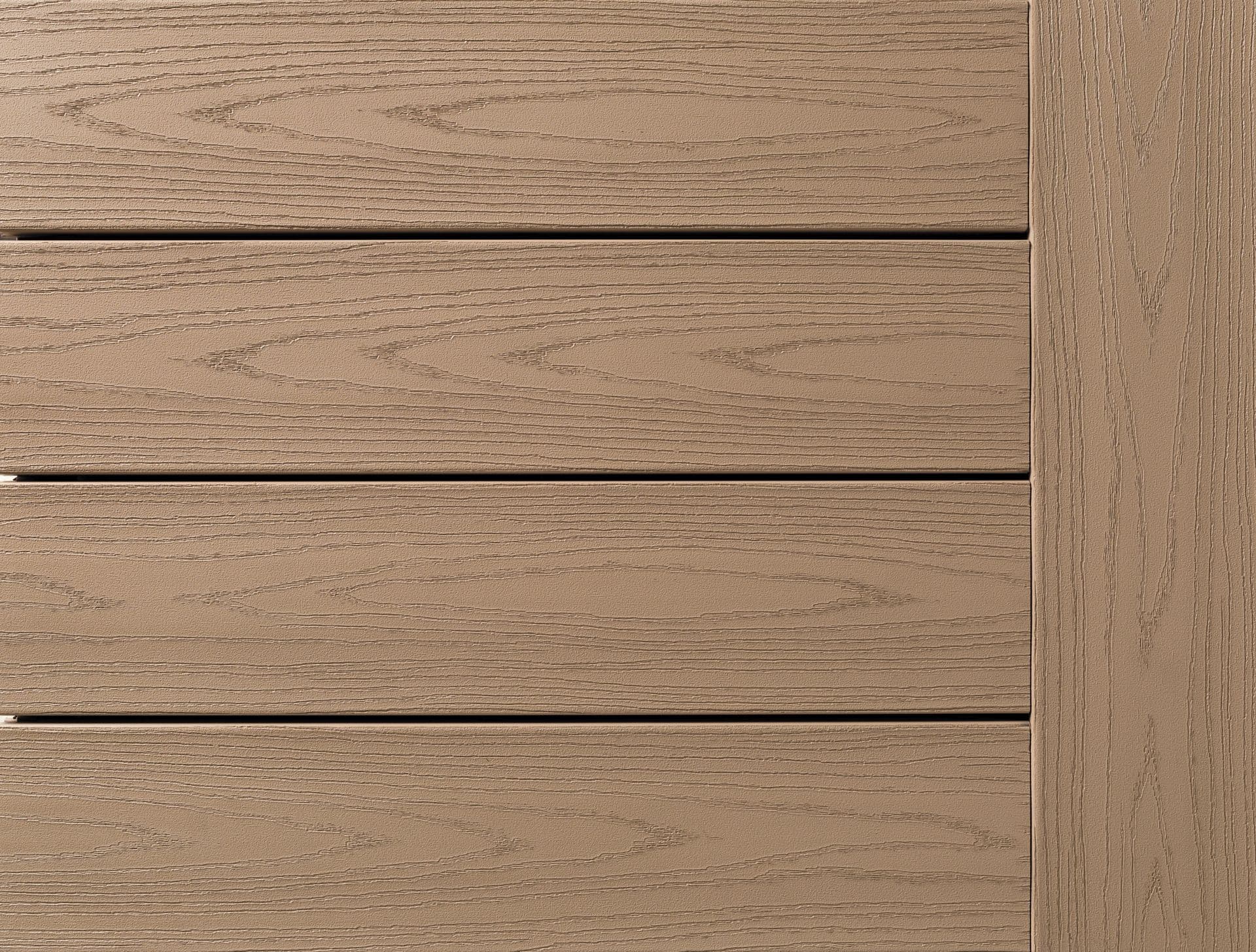
Thinking about replacing your deck?
Book a free deck consultation and we'll look at your current deck, tell you honestly whether the frame can stay, and bring TimberTech samples so you can see them next to your house. Want a ballpark first? Try our online deck estimate tool. You can also see more of our deck replacement work.
FAQ
How long does TimberTech composite decking last?
TimberTech estimates 25 to 30 years or more, and its composite collections carry 25 or 30 year product and fade and stain warranties.
How long does TimberTech Advanced PVC last?
TimberTech estimates 50 years or more. It has a limited lifetime product warranty and a 50 year fade and stain warranty.
Does composite decking last longer than wood?
Yes. A pressure treated wood deck usually lasts 10 to 15 years with regular staining. Composite lasts about twice as long with much less upkeep.
What usually fails first on a deck?
The structure underneath. Rotted joists, poorly flashed ledgers, heaving footings and loose railing posts end most decks long before the boards wear out.
Does Minnesota winter shorten a TimberTech deck's life?
Not if it's built and cared for right. Use a plastic shovel, use calcium chloride ice melt instead of rock salt, and set the footings below the frost line.
Can new TimberTech boards go on my old frame?
Only if the framing is in excellent structural condition and can be grandfathered under current code. If there's any doubt, a full replacement is the better investment.
Related reading
TimberTech Composite Decking: Everything Minnesota Homeowners Should Know
How Much Does a TimberTech Deck Cost?
TimberTech vs Trex: Which Decking Is Better?
TimberTech Composite vs Advanced PVC: Which Is Right for Your Deck?
Contact Us
Mon-Fri: 7am-8pm
Sat: 9am-5pm
Sun: Closed